Dispatch
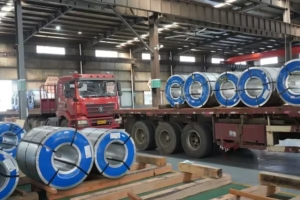
Dispatch is the process of authorizing, preparing, assigning, and sending goods, vehicles, personnel, service requests, or information from one location to another. In logistics, supply chain management, transportation, field service, and warehouse operations, dispatch ensures that orders, shipments, or resources reach the correct destination efficiently and on schedule.
Modern dispatch systems use automation, artificial intelligence (AI), GPS tracking, route optimization, and warehouse management software to improve delivery accuracy, reduce operational costs, and enhance customer satisfaction.
Dispatch is the act of sending products, vehicles, technicians, or information after they have been verified and are ready for delivery or execution.
Why is dispatch important?
An effective dispatch process helps organizations:
- Deliver orders on time
- Improve operational efficiency
- Reduce transportation costs
- Minimize delivery errors
- Optimize fleet utilization
- Improve customer experience
- Enable real-time shipment tracking
- Support supply chain visibility
How does the Dispatch process work?
A typical dispatch workflow includes:
- Order confirmation
- Inventory verification
- Picking and packing
- Quality inspection
- Dispatch approval
- Vehicle or carrier assignment
- Route planning
- Shipment release
- Delivery tracking
- Proof of delivery (POD)
What are the different types of Dispatch?
Goods Dispatch
Sending physical products from a warehouse, factory, or distribution center.
Vehicle Dispatch
Assigning trucks, vans, taxis, or delivery vehicles to transportation jobs.
Service Dispatch
Assigning technicians or field service professionals to customer locations.
Emergency Dispatch
Coordinating emergency responders such as police, fire departments, or ambulance services.
Digital Dispatch
Routing digital jobs, tickets, data, or cloud-based requests to appropriate systems or personnel.
What are the key components of a Dispatch system?
A modern dispatch management system typically includes:
- Order management
- Fleet management
- Route optimization
- GPS tracking
- Driver assignment
- Shipment scheduling
- Inventory synchronization
- Customer notifications
- Electronic proof of delivery (ePOD)
- Analytics and reporting
What are the common Dispatch documents?
- Dispatch Note
- Delivery Order
- Shipping Label
- Packing List
- Bill of Lading (BOL)
- Invoice
- Transport Manifest
- Proof of Dispatch
- Proof of Delivery (POD)
What are the top technologies used in Dispatch?
Modern dispatch operations often rely on:
- Warehouse Management Systems (WMS)
- Transportation Management Systems (TMS)
- Enterprise Resource Planning (ERP)
- Fleet Management Software
- GPS Tracking
- Barcode Scanning
- RFID
- Artificial Intelligence (AI)
- Machine Learning (ML)
- Internet of Things (IoT)
- Cloud Computing
- Mobile Dispatch Applications
What are the benefits of AI in Dispatch?
Artificial intelligence is transforming dispatch operations by enabling:
- Intelligent route optimization
- Predictive delivery scheduling
- Dynamic driver assignment
- Demand forecasting
- Traffic prediction
- Fuel optimization
- Automated dispatch decisions
- Real-time fleet monitoring
- Delivery time estimation
- Exception management
AI-powered dispatch systems reduce manual work while improving speed, accuracy, and resource utilization.
Dispatch vs Shipping
| Dispatch | Shipping |
|---|---|
| The process of sending goods from the origin | The transportation of goods to the destination |
| Begins after order preparation | Begins once goods leave the dispatch location |
| Focuses on operational coordination | Focuses on physical movement |
| Includes scheduling and assignment | Includes transit and delivery |
What are the common challenges in Dispatch?
Organizations may experience:
- Delivery delays
- Incorrect driver assignments
- Inventory mismatches
- Route inefficiencies
- Vehicle breakdowns
- Communication gaps
- Traffic disruptions
- Manual scheduling errors
- Poor shipment visibility
Key takeaways
Modern dispatch software helps minimize these challenges through automation and real-time monitoring.
What are the best practices for efficient dispatch?
- Automate dispatch workflows
- Use GPS-enabled fleet tracking
- Optimize delivery routes
- Integrate inventory systems
- Monitor deliveries in real time
- Maintain accurate customer data
- Digitize dispatch documentation
- Use predictive analytics for planning
- Train dispatch personnel regularly
- Analyze dispatch performance metrics
What are the related glossary terms?
- Dispatch Management
- Dispatch Software
- Fleet Management
- Route Optimization
- Warehouse Management System (WMS)
- Transportation Management System (TMS)
- Logistics
- Supply Chain Management
- Order Fulfillment
- Last-Mile Delivery
- Proof of Delivery (POD)
- Electronic Proof of Delivery (ePOD)
- Shipment Tracking
- Inventory Management
- Carrier Management
- Freight Management
- Load Planning
- Vehicle Routing
- Cross Docking
- Distribution Center
Frequently Asked Questions (FAQ)
What does dispatch mean in logistics?
Dispatch is the process of preparing, assigning, and sending goods from a warehouse or distribution center for transportation to their destination.
What is dispatch management?
Dispatch management is the coordination of vehicles, personnel, orders, and deliveries to ensure efficient resource allocation and timely service.
What is dispatch software?
Dispatch software is a digital platform that automates scheduling, driver assignment, route planning, shipment tracking, and communication between dispatchers and field personnel.
How does AI improve dispatch operations?
AI improves dispatch by optimizing routes, predicting delivery times, automating assignments, reducing fuel consumption, and enabling real-time operational decision-making.
What is the difference between dispatch and delivery?
Dispatch refers to the preparation and release of goods or resources, while delivery is the successful completion of transporting those goods to the final recipient.
Simplify Your Attendance Tracking
Don't let manual tracking slow you down. Automate your driver and staff attendance with DispatcherPro.
Start Free Trial