Published: July 2026
Category: Freight Market Intelligence
Reading Time: 9 Minutes
Dry van freight market update: spot rates strengthen while freight demand remains selective
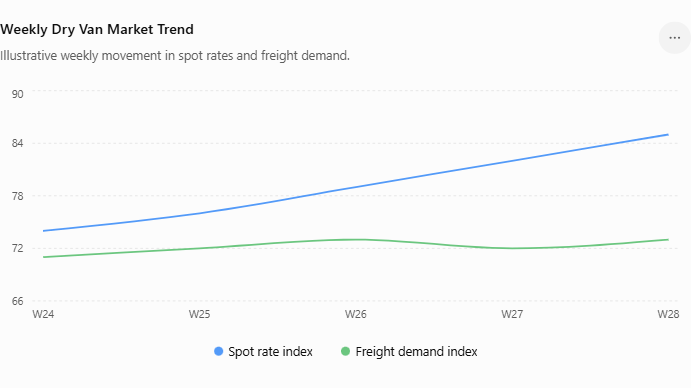
The dry van market continues to evolve as carriers and dispatchers navigate changing freight patterns across the United States. While spot rates have improved in several key freight corridors, overall demand remains balanced rather than exceptionally strong.
This week’s market shows that higher rates don’t always indicate a booming freight environment. In many cases, localized capacity constraints, seasonal shipping activity, and regional manufacturing demand are pushing prices upward even as national freight volumes remain relatively stable.
For dispatchers, this creates a different challenge.
Instead of chasing every high-paying load, the focus should shift toward improving truck utilization, securing consistent freight lanes, and reducing empty miles.
In this week’s DispatcherPro Dry Van Freight Intelligence Report, I’ll share the latest market trends, regional freight activity, capacity outlook, and practical dispatch recommendations to help carriers make smarter operational decisions.
Executive summary
This week at a glance
| Market Indicator | Current Trend |
|---|---|
| Dry Van Spot Rates | ▲ Increasing |
| Freight Demand | → Balanced |
| Truck Capacity | ▼ Tightening in Select Markets |
| Manufacturing Freight | ▲ Stable |
| Retail Distribution | ▲ Active |
| Reload Opportunities | ▲ Improving |
What this means?
Dry van rates are improving across several freight corridors, but demand remains selective. Dispatchers should prioritize profitable reloads and consistent freight networks instead of relying on isolated high-paying loads.
National market overview
Dry van freight continues to be driven by manufacturing, retail distribution, consumer goods, and warehouse replenishment.
Several regions have experienced increased outbound activity due to inventory movement and seasonal retail demand. However, freight growth has been uneven, with some markets showing stronger pricing despite relatively stable shipment volumes.
For dispatchers, this means market selection is becoming more important than ever.
The strongest opportunities are often found in freight hubs where outbound demand is supported by reliable reload options rather than temporary spot market spikes.
Regional freight analysis
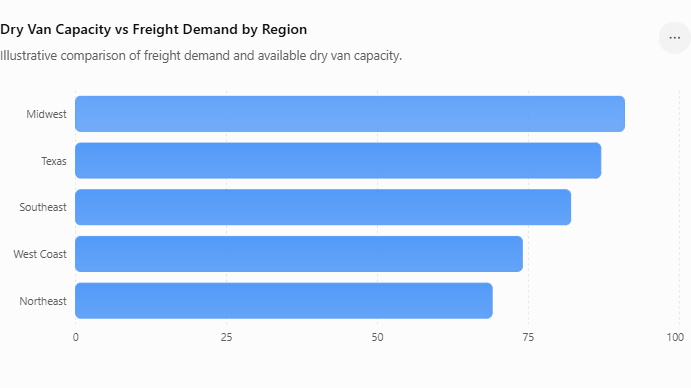
Midwest
The Midwest remains one of the strongest dry van markets due to its concentration of manufacturing facilities and distribution centers.
Current conditions
- Consistent outbound freight
- Stable manufacturing demand
- Reliable reload opportunities
DispatcherPro insight
Focus on repeat customers and regional freight networks that minimize empty repositioning.
Southeast
Retail replenishment continues supporting freight activity across Georgia, Tennessee, and the Carolinas.
Current conditions
- Balanced truck capacity
- Healthy consumer freight
- Stable outbound pricing
Dispatchers should watch for increased warehouse activity heading into late summer.
Texas
Texas continues generating strong freight volumes across industrial, construction, and consumer sectors.
Current conditions
- Strong outbound demand
- Active industrial freight
- Consistent dry van opportunities
Markets around Dallas, Houston, and San Antonio remain attractive for carriers seeking dependable freight.
West coast
Import-related freight continues supporting warehouse and distribution activity throughout Southern California.
Current Conditions
- Moderate freight demand
- Improved warehouse throughput
- Stable regional rates
While pricing remains competitive, reload planning remains essential for maximizing profitability.
Northeast
Consumer freight continues moving into major metropolitan areas, although outbound opportunities remain more selective.
Dispatchers should secure return loads before committing equipment to long-distance deliveries.
Capacity outlook
Truck availability remains relatively balanced across most regions, although several high-volume freight corridors experienced temporary tightening during the past week.
Instead of widespread capacity shortages, the market is showing localized pressure where freight demand temporarily exceeds available equipment.
For dispatchers, flexibility remains a competitive advantage.
Monitoring regional market shifts daily can create better opportunities than relying solely on national averages.
DispatcherPro AI market intelligence
At DispatcherPro AI, we believe market reports should provide practical guidance, not just historical information.
Based on current freight patterns, our analysis suggests several operational priorities for dispatchers this week.
Optimize reload planning
High spot rates don’t always produce the highest weekly revenue.
Planning reload opportunities before delivery often generates stronger overall profitability.
Stay close to freight hubs
Keeping equipment near major distribution centers increases the likelihood of securing consistent outbound freight.
Reduce empty miles
Small reductions in deadhead mileage can significantly improve operating margins over time.
Prioritize consistent customers
Reliable freight networks often outperform unpredictable spot market opportunities over the long term.
Top dry van freight lanes
| Origin | Destination | Market Outlook |
|---|---|---|
| Chicago, IL | Dallas, TX | Strong |
| Atlanta, GA | Charlotte, NC | Stable |
| Los Angeles, CA | Phoenix, AZ | Improving |
| Kansas City, MO | Denver, CO | Moderate |
| Columbus, OH | Nashville, TN | Strong |
These lanes continue offering healthy freight movement while supporting efficient reload opportunities.
What are successful dispatchers doing this week?
One pattern stands out in today’s market.
The most successful dispatchers aren’t simply booking the highest-paying loads.
They’re building profitable freight networks.
Instead of evaluating a single shipment in isolation, they’re asking questions like:
- Where will this load position my truck?
- What reload opportunities exist in that market?
- Can I reduce empty miles on the return trip?
- Will this customer generate repeat business?
Those decisions consistently outperform short-term rate chasing.
Seven-day market outlook
Looking ahead, we expect:
- Dry van spot rates to remain relatively firm.
- Capacity to tighten temporarily in major freight hubs.
- Manufacturing freight to remain stable.
- Retail distribution to continue supporting outbound demand.
- Reload planning to become increasingly important for maintaining profitability.
Unexpected weather events or supply chain disruptions could influence regional pricing, but current conditions suggest a balanced market heading into the coming week.
DispatcherPro weekly recommendations
If I were dispatching dry vans this week, these would be my priorities.
- Position trucks near major freight hubs.
- Secure reloads before delivery whenever possible.
- Focus on consistent freight corridors.
- Monitor regional capacity instead of national averages.
- Build long-term customer relationships rather than chasing one-time spot rates.
Operational consistency usually creates stronger financial results than reacting to every market fluctuation.
Final thoughts
The dry van market remains healthy, but success is becoming less about finding freight and more about managing freight efficiently.
Dispatchers who improve planning, reduce administrative work, and maximize truck utilization will continue outperforming businesses that rely solely on daily spot market opportunities.
At DispatcherPro, our goal is to provide practical market intelligence that helps dispatchers make better decisions every day. We’ll continue tracking freight trends, capacity changes, and emerging opportunities to help carriers stay ahead in an increasingly competitive market.