Published: July 2026
Category: Freight Market Intelligence
Reading Time: 9 Minutes
Flatbed freight market update: industrial freight remains resilient as construction activity moderates
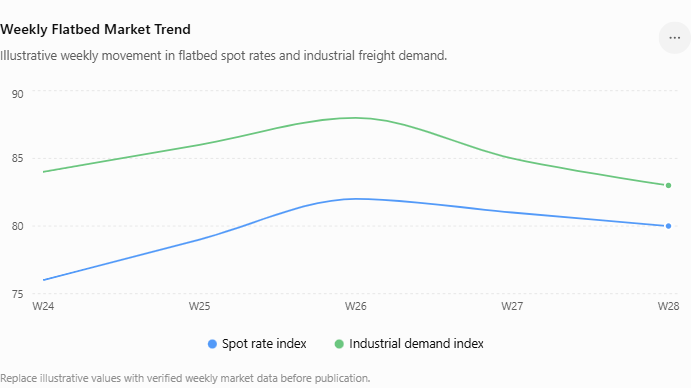
The flatbed market has entered a more balanced phase this week.
While some construction-related freight has slowed in regional markets, demand from manufacturing, infrastructure, and energy projects continues supporting consistent flatbed activity across much of the country.
This shift doesn’t necessarily signal weaker freight conditions.
Instead, it reflects a market that’s becoming more selective.
For dispatchers, success this week won’t come from chasing the highest-paying loads. It will come from understanding where industrial demand remains strong, positioning equipment strategically, and minimizing empty miles between projects.
In this week’s DispatcherPro Flatbed Freight Intelligence Report, I break down the latest regional trends, capacity changes, top freight corridors, and practical dispatch strategies to help carriers stay profitable.
Executive summary
This week at a glance
| Market Indicator | Current Trend |
|---|---|
| Flatbed Spot Rates | → Stable |
| Construction Freight | ▼ Moderating |
| Manufacturing Demand | ▲ Strong |
| Energy Freight | ▲ Improving |
| Equipment Availability | ▲ Balanced |
| Reload Opportunities | ▲ Moderate |
What this means
Flatbed demand remains healthy, but freight is becoming more industry-specific. Dispatchers focusing on manufacturing, steel, and energy corridors are likely to find more consistent opportunities than those relying solely on seasonal construction freight.
National flatbed market overview
Unlike dry van freight, flatbed demand is heavily influenced by industrial production.
Construction projects, steel manufacturing, heavy equipment, oil and gas operations, and infrastructure investments all play an important role in determining flatbed demand.
This week, manufacturing facilities continue producing consistent outbound freight, while several construction-heavy markets are experiencing a temporary slowdown following strong early summer activity.
The result is a market where planning matters more than volume.
Carriers positioned near industrial centers continue securing reliable freight, while equipment operating in slower construction regions may experience longer reload times.
Regional freight analysis
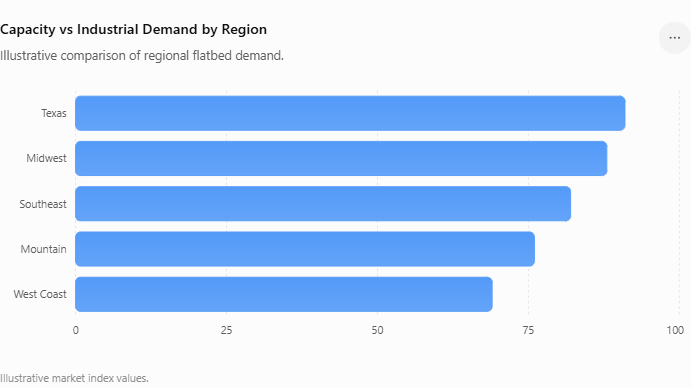
Texas
Texas remains one of the strongest flatbed markets in the country.
Energy production, industrial manufacturing, and large infrastructure projects continue generating dependable freight activity.
Current conditions
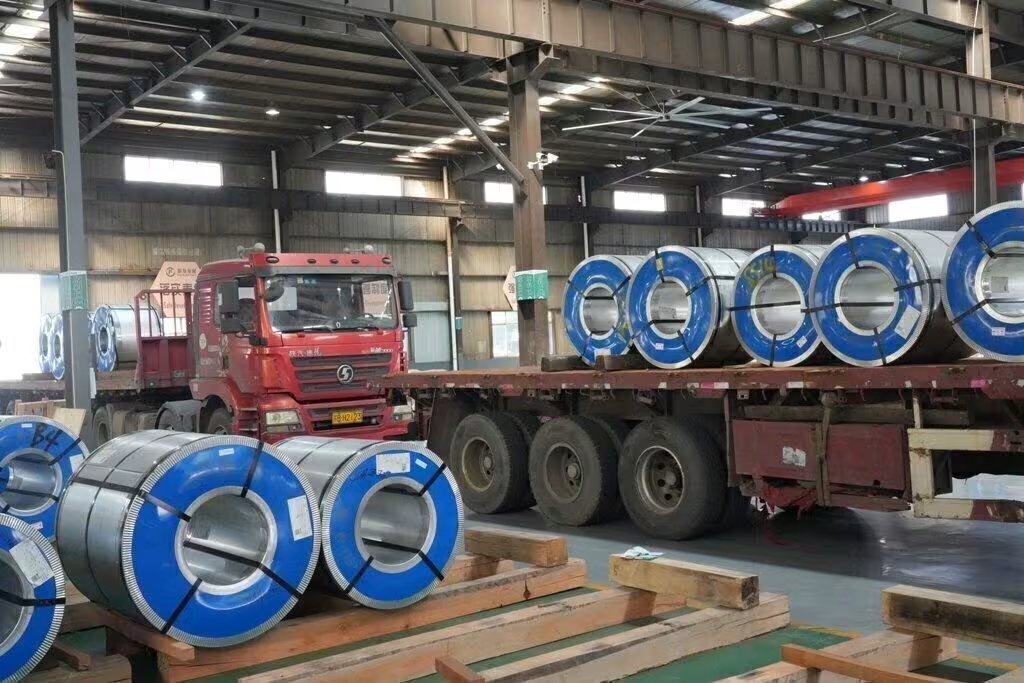
- Strong steel shipments
- Active oil and gas equipment movement
- Stable outbound demand
DispatcherPro AI insight
Keep equipment positioned around Dallas, Houston, and Odessa where industrial freight continues supporting reload opportunities.
Midwest
The Midwest continues benefiting from manufacturing and heavy industry.
Freight involving machinery, fabricated metals, and industrial components remains steady.
Current conditions
- Consistent manufacturing freight
- Balanced truck availability
- Reliable regional reloads
Southeast
Construction activity has moderated slightly compared to previous weeks.
However, shipments involving lumber, roofing materials, and building supplies continue supporting healthy freight movement.
Dispatchers should monitor large metropolitan growth markets where commercial construction remains active.
Mountain region
Mining operations, renewable energy projects, and infrastructure improvements continue supporting flatbed demand throughout several western states.
Freight volumes remain moderate but consistent.
West coast
Infrastructure investments and renewable energy projects continue generating specialized flatbed opportunities.
Equipment availability remains relatively balanced across the region.
Capacity outlook
National flatbed capacity has improved slightly over the past week.
Instead of widespread equipment shortages, we’re seeing more localized market conditions where capacity adjusts according to regional project activity.
For dispatchers, this means market awareness becomes increasingly important.
Following industry trends often produces better decisions than relying only on national averages.
DispatcherPro AI market intelligence
At DispatcherPro AI, we focus on identifying operational opportunities rather than simply reporting market activity.
Based on this week’s analysis, these are the areas I’d prioritize.
Stay close to industrial corridors
Manufacturing continues providing more consistent freight than seasonal construction activity.
Positioning equipment near production centers reduces empty miles while increasing reload potential.
Watch infrastructure projects
Government-funded infrastructure work often produces reliable flatbed freight over extended periods.
Monitoring regional project announcements can provide an advantage before demand increases.
Build multi-load plans
Instead of planning one shipment at a time, successful dispatchers are creating two or three-load strategies that reduce repositioning costs.
Follow equipment demand
Specialized trailers often outperform standard flatbeds when industrial freight increases.
Knowing where specialized equipment is needed creates stronger pricing opportunities.
Top flatbed freight lanes
| Origin | Destination | Market Outlook |
|---|---|---|
| Houston, TX | Dallas, TX | Strong |
| Birmingham, AL | Nashville, TN | Stable |
| Chicago, IL | Indianapolis, IN | Strong |
| Kansas City, MO | Denver, CO | Improving |
| Phoenix, AZ | Salt Lake City, UT | Moderate |
These lanes continue benefiting from industrial production, steel shipments, and infrastructure-related freight.
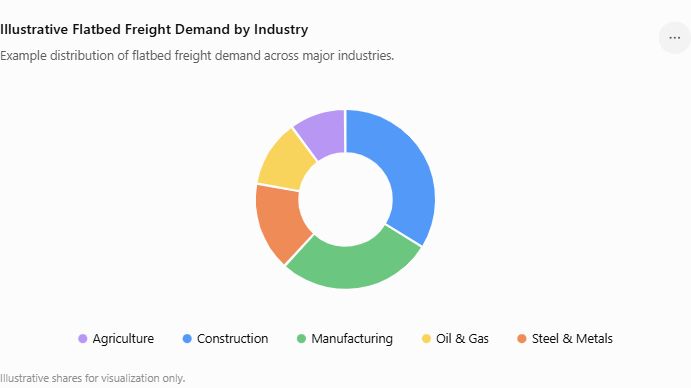
Industries driving flatbed demand
This week’s strongest freight activity continues coming from:
- Steel manufacturing
- Construction materials
- Heavy machinery
- Industrial equipment
- Oil and gas operations
- Renewable energy projects
- Agricultural equipment
- Infrastructure development
Diversifying across multiple industries helps dispatchers reduce reliance on seasonal demand cycles.
What successful flatbed dispatchers are doing?
One lesson I’ve learned over the years is that successful flatbed dispatching is rarely about reacting to today’s freight.
It’s about anticipating tomorrow’s opportunity.
The best dispatchers ask questions like:
- Which industries are increasing production?
- Where will the next project begin?
- Which customers generate repeat freight?
- Can this delivery position my truck near another industrial hub?
Thinking beyond a single shipment creates more consistent revenue over time.
Seven-day market outlook
Looking ahead, I expect:
- Flatbed rates to remain relatively stable.
- Manufacturing demand to continue supporting freight volumes.
- Construction activity to vary by region.
- Infrastructure projects to create localized demand spikes.
- Reload planning to remain essential for maximizing profitability.
Unexpected weather or project delays could temporarily affect certain markets, but overall conditions remain favorable for well-positioned carriers.
DispatcherPro AI weekly recommendations
If I were dispatching flatbeds this week, these would be my priorities.
- Position equipment near manufacturing centers.
- Follow infrastructure project activity.
- Secure reloads before delivery whenever possible.
- Monitor steel and industrial production trends.
- Reduce empty repositioning between project sites.
Small operational improvements often have a larger impact on profitability than chasing individual premium loads.
Final thoughts
The flatbed market continues rewarding preparation over reaction.
While construction demand has moderated in some regions, industrial freight remains healthy enough to support consistent opportunities for dispatchers who understand where demand is developing.
At DispatcherPro, our mission is to provide practical market intelligence that helps dispatchers make better decisions with confidence. We’ll continue monitoring flatbed trends, regional capacity, and freight opportunities to help carriers stay ahead in a changing market.