Fleet: Definition, Types, Management, and How AI Improves Modern Fleet Operations
What is a Fleet?
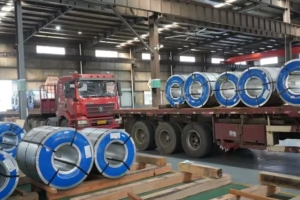
A fleet is a group of commercial vehicles owned, leased, or managed by an organization to transport goods, deliver services, or support business operations. A fleet can include trucks, vans, trailers, buses, construction equipment, or specialized vehicles depending on the industry.
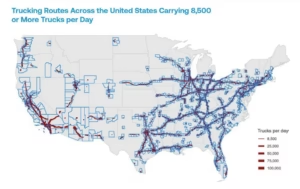
In the trucking industry, a fleet may consist of a single owner-operator truck, a regional carrier with dozens of vehicles, or a nationwide enterprise managing thousands of trucks across multiple locations.
The primary goal of operating a fleet is to move people or cargo safely, efficiently, and cost-effectively while maintaining compliance with transportation regulations.
Today, modern fleets increasingly rely on technologies such as GPS tracking, Electronic Logging Devices (ELDs), telematics, and AI-powered fleet management software to improve visibility, optimize routes, monitor driver performance, and reduce operating costs.
How does a fleet work?
A commercial fleet is much more than a collection of vehicles.
Successful fleet operations require coordination between drivers, dispatchers, fleet managers, maintenance teams, customers, and technology platforms.
A typical fleet operation includes:
- Vehicles transporting freight
- Drivers completing assigned routes
- Dispatchers scheduling loads
- Fleet managers monitoring operations
- Maintenance teams servicing equipment
- GPS and telematics systems providing real-time data
- AI software analyzing operational performance
Every trip generates valuable operational information that helps businesses improve efficiency over time.
What are the different types of fleets?
Not every fleet operates the same way.
The structure depends on the company’s industry and transportation needs.
Private fleets
A private fleet is owned by a company that transports its own products rather than freight for external customers.
Examples include retailers, manufacturers, and food distributors.
For-hire fleets
A for-hire fleet transports freight on behalf of customers and is commonly operated by trucking companies and logistics providers.
Dedicated fleets
Dedicated fleets are assigned to a single customer or long-term contract.
These fleets often operate fixed routes with consistent freight volumes.
Mixed fleet
A mixed fleet operates multiple vehicle types such as:
- Dry vans
- Refrigerated trailers
- Flatbeds
- Box trucks
- Straight trucks
Mixed fleets provide flexibility for businesses serving different transportation requirements.
Why is fleet management important?
Managing a fleet involves much more than assigning drivers and maintaining vehicles.
Fleet managers are responsible for improving productivity while controlling operating costs.
Effective fleet management helps businesses:
- Increase vehicle utilization
- Reduce fuel consumption
- Improve driver safety
- Lower maintenance expenses
- Ensure regulatory compliance
- Improve customer satisfaction
- Reduce vehicle downtime
- Optimize route planning
The larger the fleet becomes, the more important technology becomes.
What are the top common fleet challenges?
Fleet operators face numerous operational challenges every day.
Some of the most common include:
Rising fuel costs
Fuel remains one of the largest operating expenses for commercial fleets.
Improving route planning and driver behavior can significantly reduce fuel consumption.
Driver shortages
Many transportation companies continue facing difficulties recruiting and retaining qualified drivers.
Improving the driver experience and reducing administrative work can help improve retention.
Vehicle maintenance
Unexpected breakdowns reduce fleets productivity while increasing repair costs.
Preventive maintenance programs help reduce downtime.
Compliance
Fleets managers must ensure compliance with regulations covering:
- Hours of Service
- Driver qualifications
- Vehicle inspections
- Electronic Logging Devices (ELDs)
- Safety standards
Failure to comply can result in penalties and operational disruption.
How is AI transforming fleet management?
Artificial intelligence is changing how fleets operate.
Instead of relying only on historical reports, AI analyzes operational data in real time to identify trends and recommend improvements.
AI-powered fleets management systems can:
- Optimize routes
- Predict maintenance requirements
- Monitor driver performance
- Reduce idle time
- Improve fuel efficiency
- Detect safety risks
- Automate dispatching
- Improve fleet utilization
These capabilities help fleet managers make faster and more informed decisions.
What are the benefits of modern fleets management?
Organizations that invest in effective fleets management often experience:
- Improved operational efficiency
- Lower operating costs
- Better driver performance
- Increased equipment utilization
- Improved customer service
- Stronger regulatory compliance
- Greater visibility across operations
- More accurate reporting and analytics
These improvements contribute directly to long-term business growth.
Fleets vs fleets management
Although the terms are often used together, they have different meanings.
| Fleets | Fleets Management |
|---|---|
| The vehicles owned or operated by a business | The process of managing those vehicles |
| Includes trucks, vans, trailers, and equipment | Includes dispatching, maintenance, compliance, routing, and analytics |
| Physical assets | Operational strategy |
Understanding this distinction helps businesses evaluate the tools and processes needed to manage transportation effectively.
Final thoughts
A fleet is the foundation of any transportation business, but vehicles alone don’t create successful operations. The way those vehicles are managed has a direct impact on safety, efficiency, customer satisfaction, and profitability.
As fleets grow in size and complexity, technologies such as AI, telematics, GPS tracking, and intelligent dispatch software become essential for maintaining visibility and making informed operational decisions.
At DispatcherPro AI, we believe the future of fleet management combines experienced people with intelligent automation, helping businesses move freight more efficiently while improving driver performance and reducing operating costs.
Simplify Your Attendance Tracking
Don't let manual tracking slow you down. Automate your driver and staff attendance with DispatcherPro.
Start Free Trial