Over the years, I’ve learned that one of the biggest mistakes fleets make isn’t hiring poor drivers.
It’s failing to measure performance consistently.
Most trucking companies already collect an incredible amount of operational data.
GPS locations.
Electronic Logging Devices (ELDs).
Telematics.
Fuel reports.
Maintenance records.
Dashcam footage.
Delivery times.
Idle reports.
Hours of Service.
The information already exists.
The challenge is turning that information into decisions that improve safety, efficiency, and profitability.
I’ve worked with dispatchers who spend hours reviewing spreadsheets every week, only to discover problems after they have already affected customer service or operating costs.
That’s where driver scorecards completely change the process.
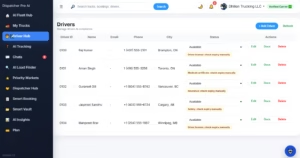
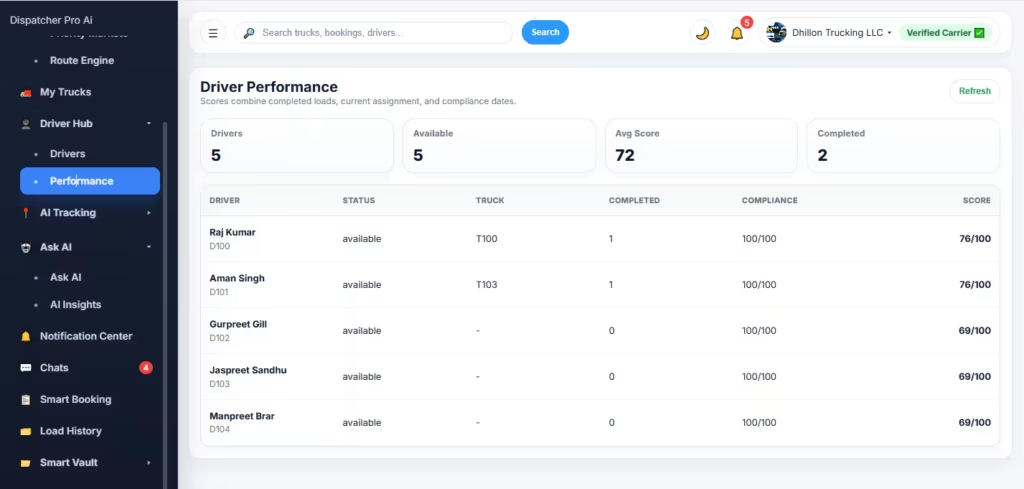
Instead of manually reviewing dozens of reports, driver scorecards organize every important performance indicator into a single view that managers and drivers can easily understand.
When artificial intelligence becomes part of that process, scorecards become far more powerful.
AI doesn’t simply measure performance.
It identifies trends, predicts risks, prioritizes coaching opportunities, and continuously improves how fleets operate.
In this guide, I’ll explain how driver scorecards work, which KPIs matter most, how AI transforms driver management, and how fleets can build a performance culture that improves every month.
What are driver scorecards in trucking?
A driver scorecard is a structured system that measures how safely, efficiently, and consistently a driver performs over time.
Instead of evaluating drivers based on opinions or isolated incidents, scorecards calculate performance using measurable operational data.
Modern driver scorecards combine information from multiple systems, including:
- GPS tracking
- Electronic Logging Devices (ELDs)
- Telematics
- Dashcams
- Fuel management platforms
- Route optimization software
- Vehicle inspections
- Maintenance systems
- Customer feedback
- Delivery performance
The result is one comprehensive performance score supported by individual KPIs.
Managers immediately understand which drivers are excelling.
Drivers understand where improvements are needed.
Leadership gains visibility across the entire fleet.
Everyone works from the same objective information.
Why driver scorecards matter more than ever?
Today’s trucking industry operates under constant pressure.
Fuel prices fluctuate.
Insurance costs continue rising.
Drivers remain difficult to recruit.
Customers expect real-time updates.
Regulations continue evolving.
Every operational decision matters.
A driver scorecard helps fleets move beyond reactive management by providing continuous visibility into performance.
Rather than asking,
“Why did this happen?”
Managers begin asking,
“How can we improve before it happens?”
That shift changes everything.
Instead of using data only after an accident or customer complaint, fleets begin using data every day to improve performance.
The result is:
- Better safety
- Lower operating costs
- Higher productivity
- Improved compliance
- Better customer service
- Stronger driver engagement
Driver scorecards don’t exist to punish drivers.
They exist to help everyone improve.
The hidden cost of poor driver performance
One unsafe driving habit rarely creates a financial crisis.
Thousands of repeated driving habits do.
For example:
A driver who idles an additional 30 minutes every day consumes significantly more fuel over the course of a year.
Another driver who consistently brakes aggressively increases brake wear and tire replacement costs.
A driver who frequently exceeds speed limits increases accident risk while reducing fuel efficiency.
Another driver regularly misses optimized routes, adding unnecessary mileage to every trip.
Viewed individually, these issues appear small.
Viewed across an entire fleet, they create major financial consequences.
How does poor driver performance impact a fleet?
| Operational Area | Potential Business Impact |
|---|---|
| Fuel Efficiency | Higher operating costs |
| Safety | Increased accident risk |
| Insurance | Higher premiums |
| Maintenance | Faster vehicle wear |
| Compliance | Regulatory penalties |
| Customer Service | Missed delivery expectations |
| Fleet Productivity | Lower utilization |
| Driver Retention | Reduced morale |
One of the biggest advantages of AI is its ability to identify these patterns long before they become expensive.
Instead of reacting to problems, managers receive early warnings and practical recommendations.
How do driver scorecards work?
Every trip produces thousands of operational data points.
Without automation, reviewing this information manually is almost impossible.
Artificial intelligence simplifies the entire process.
The workflow typically looks like this.
Driver Activity

↓

GPS Tracking

↓

ELD Data

↓

Telematics

↓

Dashcam Events

↓

AI Analysis

↓

Performance Scoring

↓

Risk Detection

↓

Manager Dashboard

↓

Driver Coaching

↓

Continuous Improvement
Each trip updates the driver’s performance profile automatically.
Instead of receiving dozens of unrelated reports, fleet managers receive meaningful recommendations.
For example:
- Driver A consistently maintains excellent fuel efficiency.
- Driver B frequently exceeds speed limits in urban areas.
- Driver C has improved significantly over the past month.
- Driver D shows increasing idle time during afternoon deliveries.
Rather than overwhelming managers with raw data, AI highlights what deserves attention first.
What is the difference between driver reports and driver scorecards?
Many fleets already generate reports.
That doesn’t mean they’re measuring performance effectively.
A report tells you what happened.
A scorecard tells you how well someone performed.
More importantly, AI explains why performance changed.
Consider the difference.
| Traditional Driver Reports | AI Driver Scorecards |
|---|---|
| Large spreadsheets | Simple performance dashboard |
| Historical information | Real-time insights |
| Manual interpretation | Automated analysis |
| Generic alerts | Personalized recommendations |
| Isolated events | Long-term trends |
| Reactive management | Continuous improvement |
That’s the reason I encourage fleets to move beyond reporting.
Reports create information.
Scorecards create action.
Why does artificial intelligence make scorecards better?
Traditional scorecards usually rely on fixed rules.
If a driver exceeds the speed limit, points are deducted.
If idle time increases, another penalty is applied.
While that approach works, it doesn’t understand context.
Artificial intelligence adds another layer.
Instead of evaluating isolated events, AI evaluates patterns.
For example, AI may discover that:
- Fuel efficiency decreases after certain route assignments.
- Harsh braking increases during specific delivery windows.
- Some drivers perform exceptionally well under heavy traffic.
- Certain vehicles consistently produce lower fuel economy regardless of driver.
These insights would be extremely difficult to identify manually.
AI continuously learns from operational data, making recommendations increasingly accurate over time.
This transforms driver scorecards from simple evaluation tools into intelligent performance management systems.
What are the four pillars of effective driver performance?
Every successful scorecard I’ve seen is built around four core areas.
Safety
Safe driving protects drivers, equipment, customers, and the business.
Metrics typically include speeding, braking, acceleration, following distance, and collision risk.
Efficiency
Efficiency measures how effectively drivers use company resources.
Fuel economy, idle time, route optimization, and equipment utilization all contribute to this score.
Compliance
Compliance ensures the fleet operates within regulatory requirements.
Hours of Service, inspections, documentation, and ELD records all play important roles.
Service quality
Customers care about more than delivery.
Communication, professionalism, on-time performance, and consistency directly affect customer retention.
When these four pillars work together, fleets gain a complete picture of driver performance rather than focusing on a single metric.
Why I believe every fleet should use driver scorecards?
I’ve never believed that technology replaces experience.
Experienced dispatchers understand customers.
Experienced managers understand drivers.
AI simply gives those people better information.
Driver scorecards create consistency.
Artificial intelligence creates intelligence.
Together, they help fleets make faster decisions, coach drivers more effectively, reduce unnecessary costs, and build stronger operations over time.
The goal isn’t creating perfect drivers.
The goal is helping every driver become better than they were yesterday.
What are the key metrics every driver scorecard should track?
One of the biggest mistakes I see fleets make is trying to measure everything.
Just because your telematics platform collects hundreds of data points doesn’t mean every metric deserves equal attention.
The best driver scorecards focus on the KPIs that directly influence safety, operational efficiency, customer satisfaction, and profitability.
These are the metrics I believe every trucking company should monitor.
1. Driver safety score
Safety should always carry the greatest weight in a driver scorecard.
A driver who consistently operates safely protects your employees, equipment, customers, and business reputation.
Typical safety indicators include:
- Speeding events
- Harsh braking
- Rapid acceleration
- Sharp cornering
- Following distance
- Collision warnings
- Seatbelt compliance
- Distracted driving alerts
Rather than evaluating isolated incidents, AI identifies long-term behavioral trends.
For example, one harsh braking event may not indicate poor driving, but repeated aggressive braking over several weeks could signal a coaching opportunity.
2. Fuel efficiency
Fuel is one of the largest operating expenses for any fleet.
Even small improvements in driving behavior can significantly reduce annual fuel costs.
AI continuously evaluates:
- Miles per gallon
- Excessive idle time
- Cruise speed consistency
- Engine performance
- Route efficiency
- Traffic-related fuel usage
Managers can compare drivers performing similar routes and identify best practices across the fleet.
3. Idle time
Idle time is often overlooked because it seems insignificant on individual trips.
Across an entire fleet, unnecessary idling can become one of the largest hidden operating costs.
Driver scorecards should measure:
- Total idle time
- Idle percentage
- Engine-on idle
- Loading delays
- Customer wait times
Reducing idle time improves fuel efficiency while lowering engine wear.
4. Route compliance
A well-planned route saves both time and money.
Scorecards should evaluate:
- Planned versus actual routes
- Unauthorized detours
- Empty miles
- Missed delivery windows
- Route optimization
AI can determine whether deviations were unavoidable or the result of inefficient decision-making.
5. Hours of service compliance
Compliance is essential for both safety and legal operation.
Driver scorecards should include:
- HOS violations
- Break compliance
- Driving hour utilization
- Log accuracy
- ELD events
Strong compliance reduces regulatory risk while improving operational reliability.
6. On-time delivery performance
Customers remember late deliveries.
They also remember consistent service.
Performance scorecards should monitor:
- On-time pickup percentage
- On-time delivery percentage
- Delivery accuracy
- Appointment compliance
- Customer communication
Reliable drivers often become the most valuable members of a fleet.
7. Vehicle care
Drivers directly influence maintenance costs.
Metrics may include:
- Daily inspections
- Preventive maintenance reporting
- Tire condition reporting
- Mechanical issue reporting
- Equipment handling
Drivers who identify problems early help prevent expensive breakdowns.
What is the example driver scorecard?
Every fleet will have different priorities, but I generally recommend weighting categories based on business impact.
| KPI | Weight | Driver Score |
|---|---|---|
| Safety | 30% | 96 |
| Fuel Efficiency | 20% | 91 |
| Route Compliance | 15% | 94 |
| Hours of Service | 15% | 98 |
| Customer Service | 10% | 95 |
| Vehicle Care | 10% | 93 |
Overall driver performance score
95 / 100
Instead of reviewing six separate reports, managers immediately understand overall performance while still having access to detailed metrics when necessary.
How does AI calculate driver scores?
Traditional scorecards often rely on simple mathematical formulas.
Artificial intelligence goes much further.
Rather than assigning fixed values to every event, AI evaluates thousands of operational variables simultaneously.
For example, instead of penalizing every speeding event equally, AI considers additional context such as:
- Road type
- Weather conditions
- Traffic density
- Route requirements
- Historical driving behavior
- Time of day
- Vehicle weight
- Delivery urgency
This produces more accurate performance evaluations.
The process typically follows these steps.
Collect Operational Data

↓

Validate Data Quality

↓

Analyze Driver Behavior

↓

Compare Fleet Benchmarks

↓

Calculate Risk Score

↓

Generate Performance Score

↓

Recommend Coaching Actions
As more trips are completed, the AI model continuously improves its understanding of normal operating behavior.
The result is a scorecard that becomes smarter over time instead of remaining static.
What are the driver scorecards by fleet type?
Not every trucking business measures success the same way.
A long-haul carrier has different priorities than a local delivery fleet.
That’s why I recommend adapting scorecards based on fleet operations.
Long-haul trucking
Key priorities include:
- Fuel efficiency
- Hours of Service
- Route optimization
- Vehicle utilization
- Safety performance
Local delivery fleets
Primary KPIs include:
- On-time deliveries
- Customer satisfaction
- Idle time
- Stop efficiency
- Route completion
Refrigerated transportation
Additional metrics may include:
- Temperature compliance
- Equipment monitoring
- Delivery timing
- Fuel management
- Trailer performance
Construction fleets
Important measurements include:
- Equipment handling
- Job site safety
- Load securement
- Vehicle inspections
- Utilization
Oil and gas transportation
Scorecards often prioritize:
- Safety compliance
- Specialized equipment handling
- Regulatory compliance
- Driver certifications
- Incident reporting
The most effective scorecards reflect the operational realities of each industry.
AI driver scorecards vs Traditional driver evaluations
The trucking industry has changed dramatically over the past decade.
Performance management should evolve as well.
| Traditional Evaluation | AI Driver Scorecards |
|---|---|
| Annual performance reviews | Continuous performance monitoring |
| Manual spreadsheets | Automated dashboards |
| Supervisor opinions | Objective operational data |
| Reactive coaching | Predictive recommendations |
| Historical reporting | Real-time insights |
| Limited visibility | Fleet-wide intelligence |
| Generic feedback | Personalized coaching plans |
This transition allows managers to spend less time reviewing reports and more time helping drivers improve.
The DispatcherPro AI driver performance framework
At DispatcherPro AI, I believe great driver performance doesn’t happen by accident.
It follows a repeatable improvement process.
I use this six-step framework to explain how AI supports continuous fleet development.
Collect

↓

Measure

↓

Analyze

↓

Score

↓

Coach

↓

Improve
Every completed trip feeds new operational data into the system.
Each coaching session creates better driving habits.
Every improvement strengthens overall fleet performance.
Rather than treating scorecards as monthly reports, I see them as a continuous improvement system that helps every driver become safer, more productive, and more successful.
What are the benefits of AI driver scorecards?
When I first started working with fleets, driver scorecards were often viewed as a reporting tool.
Today, I see them as a business improvement tool.
The difference is significant.
A modern AI-powered scorecard doesn’t just measure performance. It helps improve it.
Here are the biggest benefits I’ve seen across trucking operations.
Improve fleet safety
Every trucking company wants to reduce accidents.
The challenge is identifying risky behavior before an accident happens.
AI continuously monitors driving patterns and identifies early warning signs, including:
- Repeated speeding
- Aggressive acceleration
- Harsh braking
- Unsafe cornering
- Driver fatigue indicators
- Following distance concerns
Instead of waiting for an incident report, managers can coach drivers proactively.
That creates a safer fleet while protecting both drivers and company assets.
Reduce fuel costs
Fuel represents one of the largest operating expenses for any trucking business.
Many fleets assume fuel costs are controlled only by route planning.
In reality, driver behavior plays an equally important role.
AI identifies opportunities to reduce fuel consumption by monitoring:
- Excessive idle time
- Cruise speed consistency
- Engine efficiency
- Route deviations
- Traffic patterns
- Driving habits
When multiple drivers improve their fuel efficiency by even a small percentage, the savings become substantial over an entire year.
Lower maintenance expenses
Vehicle maintenance isn’t determined only by mileage.
Driving behavior directly affects component wear.
Harsh braking increases brake replacement costs.
Rapid acceleration creates additional engine stress.
Aggressive cornering increases tire wear.
By identifying these behaviors early, fleets can reduce unexpected repairs while extending vehicle life.
Improve driver coaching
Traditional coaching often happens after a problem has already occurred.
AI changes that process.
Managers receive clear recommendations based on operational data rather than assumptions.
Instead of telling a driver to “drive more carefully,” managers can discuss specific behaviors supported by measurable evidence.
This creates more productive coaching sessions while helping drivers understand exactly where they can improve.
Increase driver engagement
One concern I often hear is that scorecards make drivers feel like they’re constantly being monitored.
In my experience, the opposite is true when scorecards are implemented correctly.
Drivers appreciate clear expectations.
They want objective evaluations rather than subjective opinions.
Scorecards also provide opportunities to recognize top performers and reward continuous improvement.
Recognition often becomes one of the strongest motivators in a fleet.
Improve customer satisfaction
Every customer benefits when drivers perform consistently.
Higher driver performance usually leads to:
- More reliable deliveries
- Better communication
- Fewer delays
- Improved professionalism
- Higher service quality
Better customer experiences often translate directly into stronger long-term business relationships.
A real business example
Imagine a regional carrier operating 50 trucks across the Midwest and Southeast.
The company has invested in GPS tracking, ELDs, and telematics, but managers still spend hours every week reviewing reports manually.
Fuel costs continue increasing.
Maintenance expenses are rising.
Customer complaints about delivery delays have become more frequent.
After introducing AI-powered driver scorecards, several patterns emerge.
The system identifies:
- Eight drivers with excessive idle time.
- Five drivers regularly exceeding recommended speed limits.
- Three routes producing unnecessary empty miles.
- Several drivers consistently achieving excellent fuel efficiency.
Instead of treating every driver the same, managers focus coaching where it’s needed most.
Within a few months, idle time decreases, fuel efficiency improves, and maintenance costs begin stabilizing.
The technology didn’t replace managers.
It simply helped them spend more time improving performance instead of collecting data.
A 30-day driver scorecard implementation plan
One question I’m asked frequently is how to introduce driver scorecards without overwhelming drivers or dispatchers.
I recommend implementing them gradually.
Week 1: Define success
Identify the KPIs that matter most to your business.
Examples include:
- Safety
- Fuel efficiency
- Idle time
- Route compliance
- On-time delivery
Avoid measuring everything.
Focus on what creates measurable business value.
Week 2: Connect your data sources
Bring together information from:
- GPS systems
- ELD platforms
- Telematics
- Fuel management software
- Dashcams
- Maintenance records
The better the data quality, the better the scorecards become.
Week 3: Begin performance scoring
Generate baseline scores for every driver.
Don’t immediately begin coaching.
Instead, spend time understanding performance patterns.
Look for:
- Consistent strengths
- Repeated risks
- Fleet averages
- High-performing drivers
Week 4: Start coaching
Now the scorecards become actionable.
Review individual performance with drivers.
Celebrate improvements.
Set measurable goals.
Track progress every week.
Small improvements create significant long-term gains.
Measuring return on investment
One reason businesses hesitate to invest in AI is uncertainty about return on investment.
The good news is that driver scorecards affect multiple areas simultaneously.
Potential improvements include:
| Business Area | Potential Impact |
|---|---|
| Fuel Costs | Lower consumption |
| Maintenance | Reduced repairs |
| Safety | Fewer incidents |
| Insurance | Lower long-term risk |
| Productivity | Better utilization |
| Customer Service | Higher retention |
| Driver Coaching | More effective training |
Rather than evaluating one metric in isolation, I recommend measuring the combined operational impact over six to twelve months.
Fleet KPIs every manager should benchmark
Driver scorecards become much more valuable when compared against consistent benchmarks.
These are the KPIs I recommend reviewing every week.
- Overall Driver Score
- Fleet Safety Score
- Fuel Efficiency
- Idle Percentage
- Harsh Braking Events
- Speed Compliance
- Route Compliance
- On-Time Delivery Rate
- Driver Utilization
- Preventive Maintenance Compliance
- Customer Satisfaction
- CSA Performance Trends
Benchmarking allows managers to identify both high performers and opportunities for improvement.
What are the best practices for successful driver scorecards?
Technology provides the information.
Leadership creates improvement.
These practices consistently produce the strongest results.
Review performance weekly
Small corrections prevent larger problems.
Weekly coaching creates continuous improvement.
Keep metrics consistent
Changing scoring methods every month creates confusion.
Drivers should always understand how they’re being evaluated.
Reward improvement
Recognition motivates performance.
Celebrate progress rather than focusing only on mistakes.
Use data objectively
Scorecards should support conversations, not replace them.
Always combine operational data with manager experience.
Automate reporting
Managers should spend time coaching drivers instead of building spreadsheets.
Automation makes that possible.
What are the top common mistakes to avoid?
I’ve seen fleets purchase excellent software without improving performance.
Usually, the problem isn’t the technology.
It’s how it’s used.
Avoid these mistakes.
- Tracking too many KPIs.
- Ignoring fuel efficiency.
- Coaching only after incidents.
- Failing to recognize top performers.
- Using scorecards as disciplinary tools.
- Reviewing reports without taking action.
The most successful fleets use scorecards as development tools rather than compliance checklists.
Driver improvement should always be the objective.
Every coaching conversation should leave a driver feeling supported rather than criticized.
What is the future of driver scorecards in trucking?
Driver scorecards have already transformed the way fleets measure performance.
I believe the next generation of scorecards will go far beyond measuring what happened during a trip.
Instead, they’ll help predict what is likely to happen before the driver even reaches their destination.
Artificial intelligence is moving fleet management from reactive reporting to predictive decision-making.
Over the next few years, I expect AI driver scorecards to become significantly more intelligent by incorporating:
- Predictive accident prevention
- Driver fatigue detection
- AI-powered coaching recommendations
- Personalized performance improvement plans
- Insurance risk forecasting
- Vehicle health monitoring
- Real-time route recommendations
- Driver wellness insights
- Automated compliance monitoring
Rather than reviewing yesterday’s reports, fleet managers will spend more time preventing tomorrow’s problems.
That’s a major shift for the trucking industry.
AI driver scorecards vs Traditional driver reviews
Many fleets still evaluate drivers through annual reviews or occasional performance meetings.
While these reviews have value, they don’t provide continuous operational visibility.
Here’s how the two approaches compare.
| Traditional Driver Reviews | AI Driver Scorecards |
|---|---|
| Conducted monthly or annually | Updated continuously |
| Based on manager observations | Based on operational data |
| Limited historical insight | Real-time performance trends |
| Manual reporting | Automated dashboards |
| General feedback | Personalized recommendations |
| Reactive coaching | Predictive coaching |
| Difficult to benchmark | Easy fleet-wide comparison |
| Time-consuming | Automated and scalable |
The biggest difference isn’t automation.
It’s consistency.
Every driver is measured using the same objective criteria.
That creates fairness, transparency, and continuous improvement.
AI decision matrix
Not every fleet needs the same level of performance monitoring.
The value of AI increases as fleet complexity grows.
| Fleet Size | Traditional Scorecards | AI Driver Scorecards |
|---|---|---|
| 1 to 10 Trucks | Suitable | Helpful for growth |
| 11 to 50 Trucks | Good | Strong operational advantage |
| 51 to 200 Trucks | Limited visibility | Highly recommended |
| 200+ Trucks | Difficult to scale | Essential for operational efficiency |
The larger your fleet becomes, the harder it is to monitor every driver manually.
Artificial intelligence helps managers maintain visibility without increasing administrative workload.
Why I believe AI is the future of driver performance?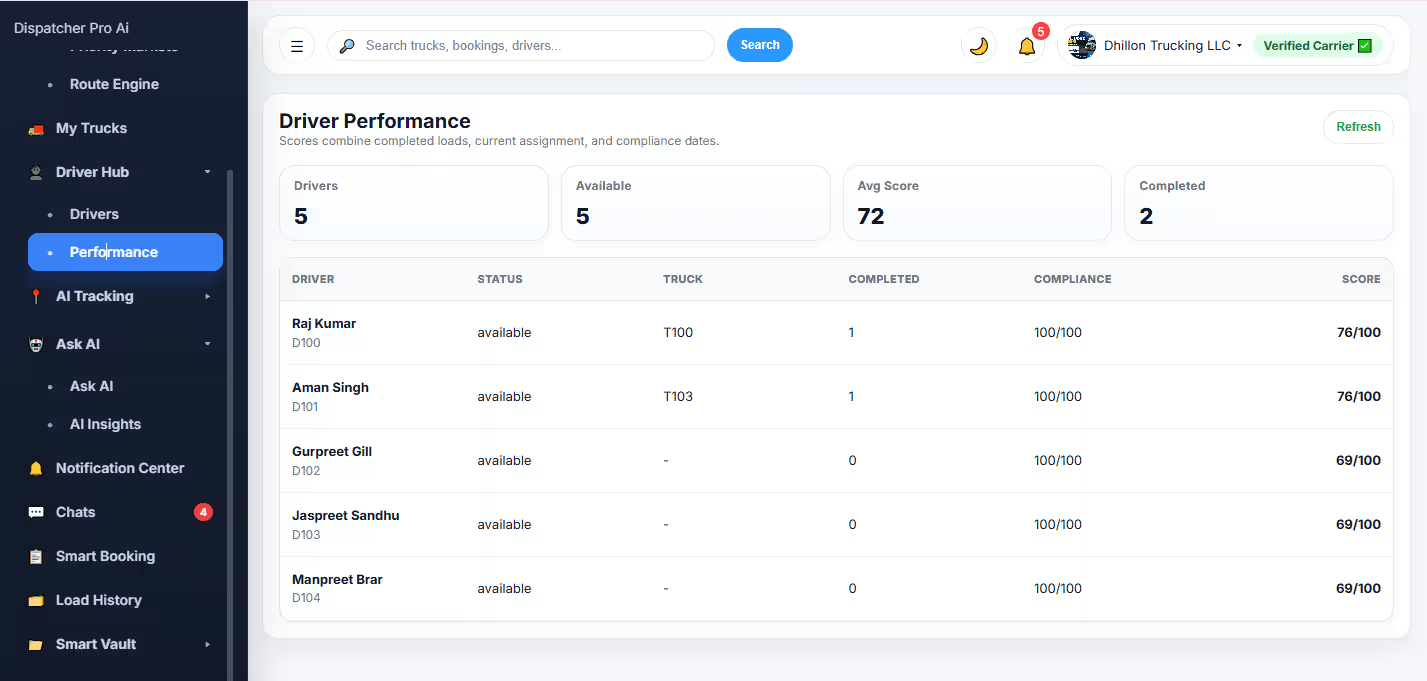
Technology doesn’t replace experienced fleet managers.
It amplifies their ability to make better decisions.
The best managers already know what great drivers look like.
AI simply helps identify those behaviors faster and more consistently.
Instead of spending hours reviewing reports, managers can focus on:
- Coaching drivers
- Solving operational challenges
- Improving customer service
- Growing the business
That’s where the real value comes from.
Final thoughts
Throughout my experience working with trucking businesses, one lesson has remained consistent.
The most successful fleets don’t rely on assumptions.
They rely on measurable performance.
Driver scorecards provide the structure to measure that performance fairly.
Artificial intelligence provides the intelligence to improve it continuously.
Together, they create a better experience for drivers, dispatchers, fleet managers, and customers.
Driver scorecards shouldn’t be viewed as a tool for identifying mistakes.
They should be viewed as a roadmap for helping every driver become safer, more productive, and more successful.
Small improvements made consistently produce extraordinary results over time.
That’s why I believe AI-powered driver scorecards will become a standard part of modern fleet management.
Ready to improve driver performance?
If you’re still relying on spreadsheets and manual performance reviews, you’re spending valuable time collecting data instead of improving operations.
DispatcherPro AI helps trucking companies automate driver scorecards, monitor performance in real time, identify coaching opportunities, and make smarter operational decisions using artificial intelligence.
Whether you’re managing a small fleet or hundreds of trucks, our platform gives you the visibility needed to improve safety, reduce operating costs, and build a more productive fleet.
Book a demo today and discover how DispatcherPro AI can help you turn driver data into better business decisions.
Frequently Asked Questions
What is a driver scorecard in trucking?
A driver scorecard is a performance management system that evaluates drivers using measurable data such as safety, fuel efficiency, compliance, idle time, route performance, and customer service. Modern scorecards combine multiple KPIs into a single performance score.
What KPIs should every trucking company include?
Most fleets should measure:
- Safety score
- Fuel efficiency
- Idle time
- Hours of Service compliance
- Route compliance
- On-time delivery
- Vehicle inspections
- Customer satisfaction
The exact KPIs should reflect your business goals and fleet operations.
Can AI generate driver scorecards automatically?
Yes.
Modern AI platforms automatically collect data from GPS systems, ELDs, telematics, dashcams, and operational software to calculate driver scores, identify risks, and recommend coaching opportunities without requiring manual spreadsheet work.
How often should driver scorecards be reviewed?
I recommend reviewing scorecards every week.
Weekly reviews make it easier to identify trends, recognize improvement, and coach drivers before small issues become larger operational problems.
How does DispatcherPro AI improve driver scorecards?
DispatcherPro AI combines operational data from multiple fleet systems into one intelligent dashboard.
Instead of manually reviewing reports, dispatchers and fleet managers receive AI-powered driver scores, coaching recommendations, operational insights, and performance analytics that help improve safety, efficiency, compliance, and overall fleet productivity.