The transportation industry has changed dramatically over the last few years. Freight volumes fluctuate daily, fuel prices continue to shift, and customer expectations for faster deliveries keep increasing.
For freight brokers, dispatch companies, and shippers, one challenge remains constant:
Finding an available carrier at the right place and the right time.
Many logistics professionals still rely on endless phone calls, emails, spreadsheets, and outdated contact lists to locate trucks. This process is slow, inefficient, and often results in missed opportunities.
In this guide, you’ll learn how successful freight professionals are finding available carriers faster in 2026 and what modern technology is changing in the trucking industry.
Why is finding available carriers so difficult?
Finding trucking companies isn’t usually the problem.
Finding available trucking companies is.
A carrier may have dozens of trucks, but that doesn’t mean they currently have equipment available in your pickup location.
Common challenges include:
- Trucks already booked
- Outdated carrier databases
- No visibility into current truck locations
- Long response times
- Multiple phone calls before finding capacity
- Difficulty finding specialized equipment
Every minute spent searching for capacity increases the risk of delayed pickups and lost business.
What are the traditional ways brokers find carriers?
Most brokers still use a combination of:
1. Existing carrier network
Many brokers rely on relationships they’ve built over several years.
While reliable, this approach limits available capacity during busy seasons.
2. Load boards
Load boards remain one of the most popular methods for connecting freight with carriers.
However, brokers often need additional communication to determine whether trucks are still available.
3. Phone calls
Calling carriers one by one remains common throughout the industry.
The downside?
It consumes valuable time and often produces inconsistent results.
4. Email outreach
Many dispatchers send mass emails hoping available carriers respond.
Unfortunately, response times vary significantly.
What are the hidden costs of manual carrier search?
Imagine spending:
- 10 minutes contacting one carrier
- 20 carriers before finding availability
That’s over 3 hours spent searching for one truck.
Multiply that across multiple shipments every day and the productivity loss becomes substantial.
What brokers need instead?
The ideal process should allow brokers to:
- Search carriers by city
- Filter by equipment
- View service areas
- Identify available trucks
- Contact carriers immediately
- Negotiate rates quickly
Instead of searching blindly, brokers should know who is available before making contact.
What are the equipment types that matter?
Different freight requires different equipment.
Common trailer types include:
Dry van
Ideal for general freight requiring enclosed transportation.
Reefer
Temperature-controlled trailers for food, pharmaceuticals, and perishable products.
Flatbed
Used for oversized machinery, steel, lumber, and construction materials.
Step Deck
Suitable for taller freight that exceeds standard trailer height restrictions.
How real-time carrier availability changes everything?
Imagine opening one platform and instantly viewing:
- Carrier location
- Equipment type
- Availability
- Preferred lanes
- Contact information
Instead of making dozens of calls, brokers can immediately identify carriers capable of handling their shipment.
This reduces response time and helps move freight faster.
What are the benefits for carriers?
Carriers also benefit from improved visibility.
Instead of waiting for brokers to call, they can:
- Publish service areas
- Update truck availability
- Receive load opportunities
- Build long-term relationships
- Reduce empty miles
What are the benefits for dispatch companies?
Dispatch companies managing multiple trucks can:
- Update availability once
- Receive direct load offers
- Communicate with brokers efficiently
- Improve truck utilization
What are the benefits for shippers?
Shippers gain access to:
- Faster capacity
- Better communication
- Improved visibility
- Reduced transportation delays
What are the features to look for in a carrier discovery platform?
When evaluating modern logistics technology, consider whether it offers:
- Carrier search by location
- Equipment filters
- Live carrier availability
- Built-in messaging
- Load offer management
- Carrier profiles
- Secure company verification
What is the future of freight matching?
The logistics industry is moving toward real-time collaboration.
Instead of relying solely on spreadsheets and phone calls, companies increasingly expect:
- Faster communication
- Better visibility
- Digital collaboration
- Intelligent carrier matching
- Centralized carrier information
Businesses that adopt these tools are often able to reduce search time and improve operational efficiency.
How does DispatcherPro AI help?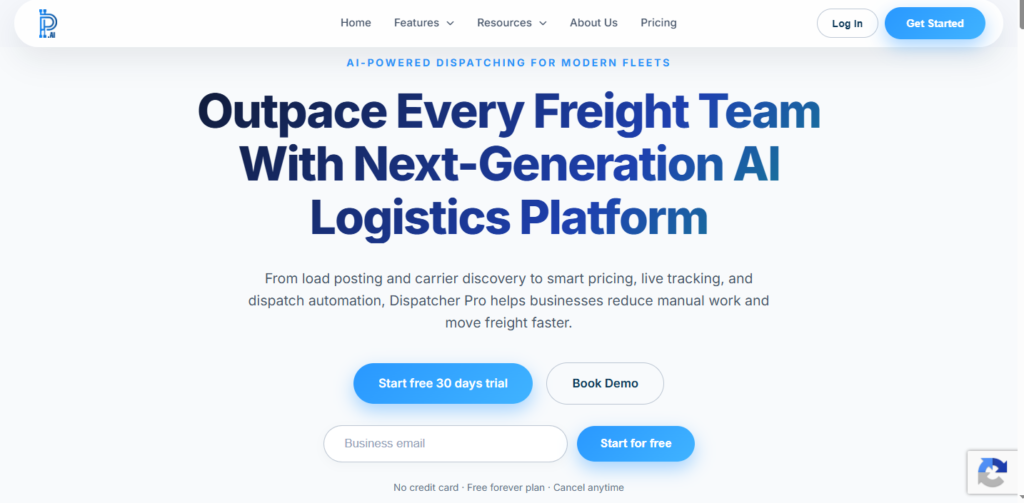
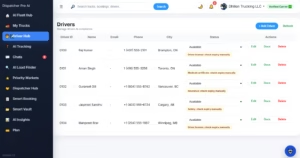
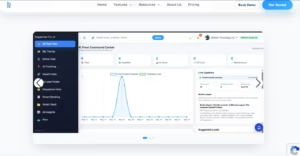
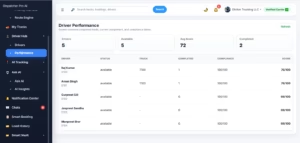
DispatcherPro AI is designed to simplify how freight professionals connect with available carriers.
With Dispatcher Pro AI you can:
- Search carriers by location
- Filter by equipment
- Discover available trucking companies
- Send load offers
- Communicate through integrated chat
- Build long-term carrier relationships
Whether you’re a freight broker, dispatcher, shipper, or carrier, DispatcherPro AI provides one centralized platform for discovering and communicating with transportation partners.
Final thoughts
Finding available carriers shouldn’t require dozens of phone calls.
As freight volumes continue growing and customer expectations increase, visibility and communication become even more important.
Modern carrier discovery platforms help brokers, dispatchers, and shippers spend less time searching and more time moving freight.
The future of logistics isn’t simply about finding trucking companies.
It’s about finding the right carrier at the right place at the right time.