Published: July 2026
Category: Freight Market Intelligence
Reading Time: 8 Minutes
Produce capacity stabilizes as summer harvest enters a new phase
Every produce season follows a familiar pattern.
Demand builds quickly, truck capacity tightens, rates climb, and dispatchers spend weeks trying to keep up with rapidly changing market conditions.
As we move further into July, we’re beginning to see that pressure ease across several major produce regions.
Capacity is gradually returning to key markets, rate volatility has slowed, and dispatchers are shifting their focus from simply finding trucks to improving fleet utilization and securing stronger reload opportunities.
While produce continues to generate healthy freight volumes, the market is becoming more balanced compared to the aggressive conditions many carriers experienced earlier in the season.
This week’s DispatcherPro AI Freight Intelligence Report looks at what’s changing across major produce regions, what dispatchers should expect over the coming week, and where the best opportunities are likely to emerge.
Executive summary
This week at a glance
| Market Indicator | Current Trend |
|---|---|
| Produce Volume | Stable |
| Reefer Capacity | Improving |
| Spot Rates | Softening Slightly |
| Driver Availability | Improving |
| Deadhead Risk | Moderate |
| Market Competition | Increasing |
What this means?
We’re seeing the market transition from a capacity-driven environment toward a more competitive freight market.
For dispatchers, this means securing profitable reloads and reducing empty miles will become increasingly important over the next several weeks.
Market overview
Fresh produce remains one of the strongest freight drivers during the summer months.
California continues to dominate outbound produce shipments, while the Southeast remains active with seasonal fruits and vegetables.
At the same time, truck availability has improved compared to previous weeks.
Instead of chasing every available load, many dispatchers are now focusing on maximizing profitability through better planning and stronger lane selection.
This is exactly where intelligent dispatching creates an advantage.
Rather than reacting to market changes, successful dispatchers are planning two or three moves ahead.
Regional market analysis
California
California remains the country’s largest produce shipping region.
Major commodities currently moving include:
- Lettuce
- Grapes
- Strawberries
- Tomatoes
- Bell Peppers
- Citrus
Current conditions
Demand remains healthy.
Truck availability has improved compared to earlier in the season, reducing upward pressure on rates.
DispatcherPro insight
If you’re dispatching reefer equipment from California, prioritize loads with strong reload potential rather than simply accepting the highest outbound rate.
A slightly lower-paying outbound load with a quality backhaul often produces better overall profitability.
Southeast
Georgia and Florida continue producing consistent freight activity.
Seasonal fruit shipments remain active, although capacity is recovering faster than demand.
Current conditions
- Moderate freight demand
- Improving truck supply
- Stable market pricing
Dispatcher recommendation
Avoid committing equipment too early.
As capacity continues improving, stronger opportunities may appear later in the day.
Midwest
The Midwest continues acting as both a receiving market and an important redistribution hub.
Many carriers delivering produce into the region are successfully securing dry van or refrigerated reloads.
Current conditions
- Balanced capacity
- Consistent outbound opportunities
- Lower volatility
Pacific northwest
Produce activity continues supporting refrigerated freight demand, although volumes remain below California.
Dispatchers should monitor seasonal crop movements closely over the coming weeks.
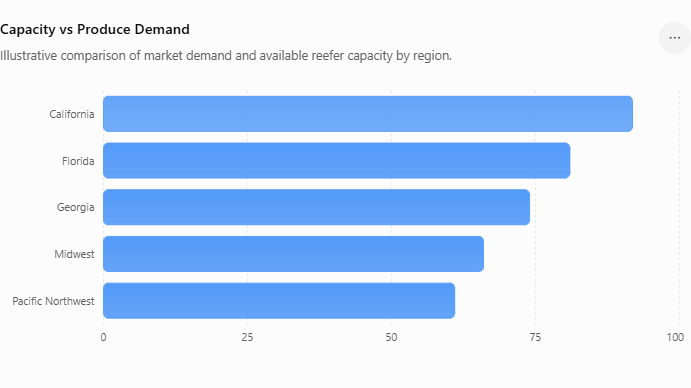
Capacity outlook
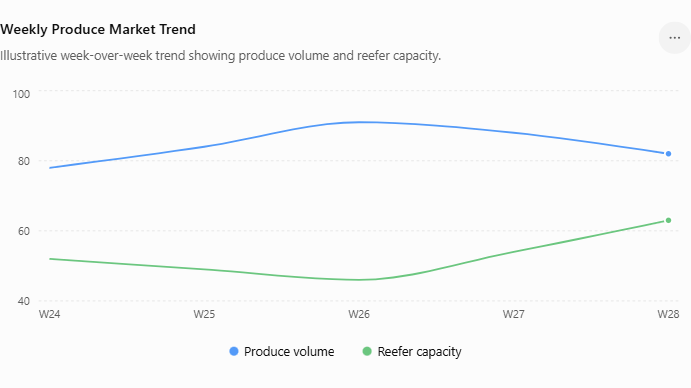
One noticeable change this week is improving truck availability.
Earlier this season, dispatchers often struggled to locate qualified reefer equipment.
That situation is beginning to normalize.
More available trucks generally create:
- Increased carrier competition
- Better service levels
- More negotiating flexibility
- Slight downward pressure on spot pricing
This doesn’t mean freight demand is slowing dramatically.
It simply means supply and demand are becoming more balanced.
AI dispatch insights
At DispatcherPro AI, we believe market reports should go beyond explaining what happened.
They should help dispatchers decide what to do next.
Based on current market conditions, these are the operational priorities we’d focus on this week.
Focus on reload planning
Don’t wait until delivery to search for your next load.
Begin planning reload opportunities before your truck arrives.
Reducing even a small amount of empty mileage can significantly improve weekly profitability.
Prioritize lane consistency
Consistent freight lanes often outperform unpredictable high-paying shipments over time.
Reliable customers and repeat lanes reduce planning complexity while improving operational efficiency.
Watch market timing
Produce freight often changes throughout the day.
Monitor afternoon opportunities as additional loads enter the market.
Reduce administrative delays
Market opportunities disappear quickly.
Dispatch teams that automate paperwork and communication can respond faster than competitors relying on manual processes.
Top produce freight lanes to watch
| Origin | Destination | Outlook |
|---|---|---|
| Fresno, CA | Dallas, TX | Strong |
| Salinas, CA | Phoenix, AZ | Stable |
| Bakersfield, CA | Denver, CO | Improving |
| Lakeland, FL | Atlanta, GA | Stable |
| Yakima, WA | Salt Lake City, UT | Moderate |
These lanes continue generating healthy refrigerated freight activity while providing reload opportunities in major freight markets.
What successful dispatchers are doing differently
One thing I’ve noticed over the years is that top-performing dispatchers rarely make decisions based on a single load.
They’re thinking about the next two or three moves.
Instead of asking,
“How much does this load pay?”
they’re asking,
“What does this load position my truck to do next?”
That mindset consistently produces better long-term results.
Good dispatching isn’t just about revenue.
It’s about positioning.
7-Day market outlook
Looking ahead, we expect:
- Produce volumes to remain healthy.
- Reefer capacity to continue improving.
- Spot rates to remain relatively stable.
- Competition among carriers to increase gradually.
- Reload planning to become increasingly important.
Unexpected weather events could temporarily tighten capacity in certain regions, but current market conditions suggest continued stabilization across major produce lanes.
DispatcherPro weekly recommendations
For the coming week, we’d recommend focusing on five operational priorities:
- Secure reload opportunities before delivery.
- Monitor changing capacity throughout the day.
- Avoid unnecessary deadhead whenever possible.
- Use real-time visibility to communicate proactively with customers.
- Focus on long-term lane profitability instead of chasing individual high-paying loads.
Small operational improvements often create the biggest financial gains over time.
Final thoughts
Produce season continues creating valuable opportunities for carriers and dispatchers, but the market is entering a more balanced phase.
As truck availability improves, operational efficiency will become a greater competitive advantage than simply finding freight.
Businesses that plan, reduce administrative work, and improve fleet utilization will be better positioned to maintain profitability as seasonal conditions continue to evolve.
At DispatcherPro AI, we’ll continue monitoring freight trends, capacity movements, and dispatch insights to help carriers, brokers, and fleet managers make better operational decisions every week.